


Dolling, in communion with girls who first introduced sassy to the streets

Wearing vibrant satin with gloves and socks to match, carrying boa-wrapped umbrellas, whiskey flasks tucked neatly of their bras, and cigars hanging loosely of their mouths. Flamboyant of their presentation, with smiles that invite you to bounce—and dance with you they are going to, in case you get their consideration by standing on the sideline.
This Black masking custom, Babydolling, was born in segregation and raised in revolution within the early twentieth century in probably the most infamous neighborhoods of New Orleans.
Black Storyville, or the Battlefield because it was referred to as, was recognized for violence, vice, and good instances. Jazz golf equipment, sporting homes, and playing dens have been the financial drivers for this space. The ladies who lived on this space didn’t have to hunt independence; it was demanded of them.
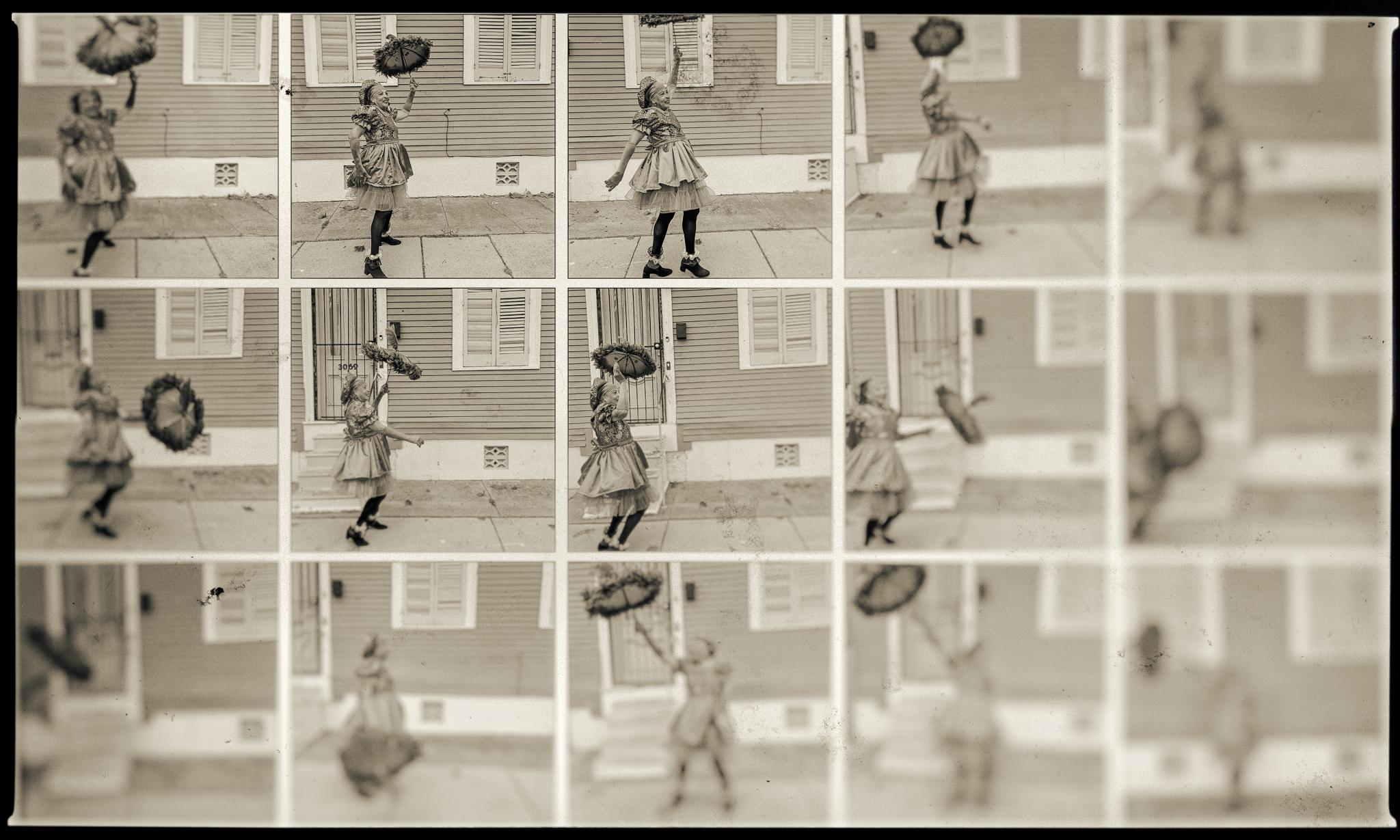
These dismissed, devalued, and disregarded girls selected to boldly dare the world to see them as they noticed themselves: valued, lovely, and able to holding a spot in Carnival traditions.
This expression of Black girls’s independence has lasted for over 100 years. Twenty years in the past, when the nightmare of Hurricane Katrina was upon us and we have been unfold out like mayonnaise across the nation, many people knew we’d do all the things and something we might to get again dwelling.
We dreamed of dwelling at the same time as different locations graciously hosted us. We, in gratitude, sought not to wear down our welcome.
Returning to the acquainted metropolis, to keep up our tradition
Despite the fact that housing was a serious difficulty, with over 100,000 houses misplaced to this catastrophic occasion, our collective minds have been on sustaining the factor we maintain most pricey to our hearts. We needed to ensure that the tradition we had curated, created, and artistically spent generations pouring our spirit into was assured to proceed. These elders of the neighborhood, like me, knew that we should work to verify we’re capable of go down the why and the how for future expressions of genius now we have but to witness.
After Hurricane Katrina, the Black masking custom of Babydolling emerged with a brand new dedication. We started to see extra troupes being fashioned and regalia changing into extra elegant and fashion-forward. The artwork of umbrella design turned aggressive and a enterprise for our extra gifted dolls, who nonetheless ship worldwide, whereas others like me rushed to inform our story, to put it into the bigger historical past of town.
Dr. Kim Vaz-Deville, a superb researcher, helped to inform that story to the world, as she pieced collectively our Babydoll historical past in what would grow to be her life’s work and, in 2013, the guide The Child Dolls: Breaking the Race and Gender Limitations of the New Orleans Mardi Gras Custom. . Her writings gave us peer-reviewed, documented area within the narrative of Black masking.
What we all know is that tales perform as a reminder of who we’re and why we do that factor. This factor is the guts and soul of Black tradition. This reality is the idea of stoop-sitting and storytelling. Very like homing pigeons, we got here again after Katrina, feeling shattered and surprised after being positioned in unfamiliar cultures, with totally different cuisines, and with out the tightly knit communities that kind the guts of our neighborhoods.
We acutely felt the shortage of road cries of “How’s ya momma and ’em?” or “Ya know there’s a line tomorrow for Mr. or Ms. So-and-So.”
We returned to our metropolis devastated however decided to have a Carnival season the next 12 months within the midst of blight and uncertainty.
When you placed on that first gown, it’s virtually not possible to cease
Three years after I returned from Katrina displacement, I placed on my first babydoll regalia, after becoming a member of a newly fashioned group of ladies who knew the significance of historical past, tradition, and traditions.
I can inform you, when you placed on the primary gown, it’s virtually not possible to say, “I’m not popping out this 12 months.” If you don’t placed on a gown, you lament for all the 12 months in guilt, all of the whereas forming a tragic story racked in self-humiliation for not doing all of your responsibility as an individual dwelling inside the tradition of New Orleans.
It’s the worth of being born in a neighborhood of road artists prepared to placed on a public present free of charge, for the enjoyment of it, with music, dance, and poetry born of battle by a folks unappreciated by society’s norms.
I do it for the sacredness of reminiscence. I do it in communion with the ladies who first introduced sassy to the streets. I do it in reverence for our survival. In New Orleans, traditions are faith, with streets changing into our altars and dancing on them changing into prayer. We dance to name our ancestors and to please the spirits.
Babydoll dancing could seem decorative on the floor, however to some it’s an expression of unashamed, sexualized femininity.
They exaggerated femininity till it turned energy. They took what society used to disgrace them and turned it into spectacle, humor, and command. It’s a refusal to separate physique from spirit.
We dance in remembrance of those that danced with pleasure whereas society tried to disgrace the widow who wakened one morning with no meals to feed her youngsters after which selected intercourse work over hunger. We dance for individuals who danced away the ache of restrictions with unrecognized brilliance denied at each flip. We dance for individuals who longed to bounce however bodily couldn’t, and we dance in solidarity with those that dance in hope for one thing not but attained.
The power we carry is a testomony to a tradition born in road performances for the world to see, the place artwork, tradition, and the divine meet.
A refusal to be totally legible to outsiders.

Babydoll masking is sacred as a result of it sanctifies the unusual Black girl. To start with, they have been the home employees doing what was referred to as day’s work, or the laundress, or barmaids in Black Storyville, or the intercourse employees.
Dancing blesses the physique that works, needs, ages, and survives. It says holiness doesn’t solely reside in church buildings or shrines, but additionally lives on the street, in humor, in a brief gown on a chilly Mardi Gras morning, in a girl who is aware of easy methods to flip her life into ceremony.
Regalia adjustments from 12 months to 12 months. Faces age, our bodies shift, and limbs stiffen. What issues is presence. You present up. You stroll. You’re seen. You then return to your life, carrying the residue of that energy with you. This mirrors the religious rhythm of the custom itself: centered, embodied, unforgettable.
The sacredness of Babydolling additionally lies of their refusal to be totally legible to outsiders. Not each gesture is for clarification. Not each image is for consumption. In a tradition that always calls for entry to Black creativity, Babydolls maintain many ritual meanings for themselves.
The custom transforms the road right into a sanctuary the place Black girls set the foundations. They stroll when they need, cease visitors after they select, converse to whom they please. In that area, town bends round them.
It’s the rituals carried out when one troupe encounters one other as we meet going from one act to a different on this spontaneous stage play. Improvisation is our superpower; innovation is the muse buried in our DNA, and spirit is the circus grasp. These human boundaries grow to be holy. They shield the custom from changing into hole.
Ours is a ritual born from defiance, survival, and Black girls’s refusal to vanish.
Babydolls are sometimes misunderstood as a result of their energy is refined and their aesthetics playful. Outsiders typically see flirtation, parody, or nostalgia. However Babydoll masking is just not cute for the sake of cuteness. It’s a ritual born from defiance, survival, and Black girls’s refusal to vanish. Its sermon lives in that refusal.
Preparation is ritual. Whereas Babydoll fits should not bead-heavy like different Black Masking traditions, the care put into them isn’t any much less intentional. Selecting colours, textures, and equipment makes every determination a type of self-definition. Whereas some Babydolls sew, others thrift, borrow, remix, and repurpose. The sacredness is just not in uniformity however in company. Each look says: that is how I declare my physique right now. That is how I present up for my ancestors and myself.

As I put together to put down my umbrella for the final time, I felt compelled to assemble the subsequent technology of Babydoll tradition keepers. As founding father of The New Orleans Voodoo Babydolls, I selected girls and a person who not solely love the tradition however are prepared to make the sacrifices in time and creativity it takes to proceed the custom.
The troupe consists of a broadcast author, a French speaker for any historic translation wanted who additionally acts as our journey advisor, a really succesful younger man who selected the identify “Pimp Dandy” and serves as our enterprise supervisor and social media guru, and a really gifted textile artist who’s our artistic director.
This intentional mixture of younger makers ensures that the tales stay pure of their telling throughout all genres. I’ll proceed to advise and assist assist this group till they perceive the significance of their mission.
And at last, I masks to disclose reality via efficiency.
The reality is how Babydolls flip streets right into a sanctuary the place Black girls set the foundations.
Associated


