


A reporter died with Custer at Little Bighorn 150 years in the past

They’ve died from artillery fireplace, plane crashes, gunfire, illness — even by execution — in battle zones and elsewhere all over the world.Over the 180-year historical past of The Related Press, 38 journalists have fallen on the job whereas working for the unbiased not-for-profit information group.Thursday marks the one hundred and fiftieth anniversary of the very first: Mark Kellogg, considered one of 5 civilians killed alongside Lt. Col. George Armstrong Custer and his males on the Battle of Little Bighorn.Kellogg, 43, was embedded with Custer’s troops. He was reporting for The Bismarck Tribune and New York Herald — the AP circulated his stories throughout the nation — when Custer underestimated the scale of a Sioux village that he attacked.Custer and his outnumbered males made a final stand on a hill. There, they have been annihilated by Native American defenders. Kellogg’s scalped physique was discovered not distant.His final printed dispatch learn partially: “I am going with Custer and shall be on the loss of life.”It was extra of an try at poetry than prophecy. Nonetheless, Kellogg’s last phrases and destiny circulated far and extensive by way of his employers and the AP. It gave the obscure, part-time journalist, a widower who labored quite a lot of jobs to assist his two daughters, fame in loss of life.He had received to know Custer. He mingled with and interviewed the troopers at their camps, historian Sandy Barnard saidIn different methods, Kellogg was a lot completely different from fashionable journalists. He carried a rifle into motion, Barnard identified. And he made no try to keep away from not simply bias however racism in opposition to Native People, whom he referred to as “purple devils.””Over the past phases of the marketing campaign, Kellogg was in all probability extra of a soldier than he was a newspaper man,” mentioned Barnard, writer of a Kellogg biography and different books on the Battle of the Little Bighorn.The State Historic Society of North Dakota preserves Kellogg’s diary and varied belongings, together with eyeglasses, tobacco, clothes and a mosquito head internet. The delicate diary, now digitized on-line, paperwork climate, distances lined, who was using in entrance and in again, what number of antelope they noticed and different day-to-day operations, Deputy State Archivist Lindsay Meidinger mentioned. The diary ends earlier than the battle.”It is a major supply of the historic occasion,” Barnard mentioned, “that not many different major sources stay from that point interval associated to the Seventh Cavalry and Custer.” “Whereas his file as a journalist is perhaps very small in comparison with fashionable reporters who go into fight, he actually was doing precisely what they’re doing,” she mentioned.Others who’ve perished whereas reporting for AP in battle zones embrace:— Mariam Dagga, a contract visible journalist who was killed in an Israeli strike on a hospital within the Gaza Strip final August;— Anja Niedringhaus, a photographer shot by a police officer as she sat in her automobile in Afghanistan in 2014;— Myles Tierney, a videojournalist killed whereas touring in a convoy that got here underneath fireplace in Freetown, Sierra Leone, in 1999;— Joseph Morton, a battle correspondent who was the one U.S. reporter recognized to have been executed by the Nazis following his seize alongside Slovakian partisans in 1944.Related Press company archivist Sarit Hand in New York and Jack Dura in Bismarck, North Dakota, contributed to this report.
They’ve died from artillery fireplace, plane crashes, gunfire, illness — even by execution — in battle zones and elsewhere all over the world.
Over the 180-year historical past of The Related Press, 38 journalists have fallen on the job whereas working for the unbiased not-for-profit information group.
Thursday marks the one hundred and fiftieth anniversary of the very first: Mark Kellogg, considered one of 5 civilians killed alongside Lt. Col. George Armstrong Custer and his males on the Battle of Little Bighorn.
Kellogg, 43, was embedded with Custer’s troops. He was reporting for The Bismarck Tribune and New York Herald — the AP circulated his stories throughout the nation — when Custer underestimated the scale of a Sioux village that he attacked.
Custer and his outnumbered males made a final stand on a hill. There, they have been annihilated by Native American defenders. Kellogg’s scalped physique was discovered not distant.
His final printed dispatch learn partially: “I am going with Custer and shall be on the loss of life.”
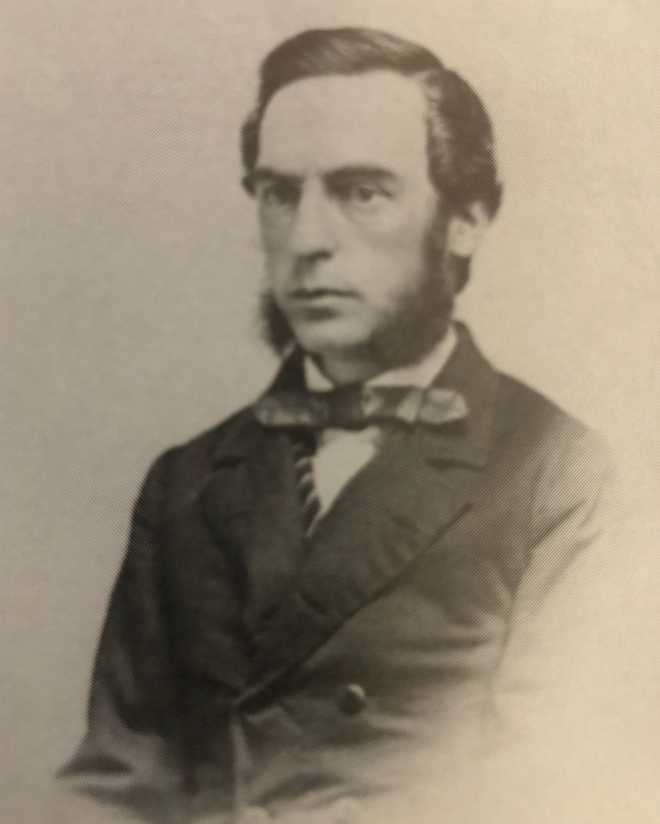
It was extra of an try at poetry than prophecy. Nonetheless, Kellogg’s last phrases and destiny circulated far and extensive by way of his employers and the AP. It gave the obscure, part-time journalist, a widower who labored quite a lot of jobs to assist his two daughters, fame in loss of life.
He had received to know Custer. He mingled with and interviewed the troopers at their camps, historian Sandy Barnard mentioned
In different methods, Kellogg was a lot completely different from fashionable journalists. He carried a rifle into motion, Barnard identified. And he made no try to keep away from not simply bias however racism in opposition to Native People, whom he referred to as “purple devils.”
“Over the past phases of the marketing campaign, Kellogg was in all probability extra of a soldier than he was a newspaper man,” mentioned Barnard, writer of a Kellogg biography and different books on the Battle of the Little Bighorn.
The State Historic Society of North Dakota preserves Kellogg’s diary and varied belongings, together with eyeglasses, tobacco, clothes and a mosquito head internet. The delicate diary, now digitized on-line, paperwork climate, distances lined, who was using in entrance and in again, what number of antelope they noticed and different day-to-day operations, Deputy State Archivist Lindsay Meidinger mentioned. The diary ends earlier than the battle.
“It is a major supply of the historic occasion,” Barnard mentioned, “that not many different major sources stay from that point interval associated to the Seventh Cavalry and Custer.”
“Whereas his file as a journalist is perhaps very small in comparison with fashionable reporters who go into fight, he actually was doing precisely what they’re doing,” she mentioned.
Others who’ve perished whereas reporting for AP in battle zones embrace:
— Mariam Dagga, a contract visible journalist who was killed in an Israeli strike on a hospital within the Gaza Strip final August;
— Anja Niedringhaus, a photographer shot by a police officer as she sat in her automobile in Afghanistan in 2014;
— Myles Tierney, a videojournalist killed whereas touring in a convoy that got here underneath fireplace in Freetown, Sierra Leone, in 1999;
— Joseph Morton, a battle correspondent who was the one U.S. reporter recognized to have been executed by the Nazis following his seize alongside Slovakian partisans in 1944.
Related Press company archivist Sarit Hand in New York and Jack Dura in Bismarck, North Dakota, contributed to this report.


