


That is half 4 of the occasional collection, Earlier than the Document: The Pipelines, which examines the insurance policies and practices that criminalize ladies
Mea was 15 years outdated, however she didn’t seem like it. They referred to as her “redbone,” referring to the hue of her pores and skin and sandy-colored hair. She developed early, and each man who crossed her mom’s threshold seen.
Like most women who find yourself earlier than a decide, Mea skilled violence and abuse. Women’ pathways into the justice system run by victimization, not round it, researchers have discovered.
A dataset from Loyola College’s Trendy Slavery Analysis Challenge, confirms this with brutal precision: 100% of ladies who engaged in criminalized survival behaviors had prior histories of victimization.
Each single one.
That very same dataset additionally discovered that almost 90% had skilled systemic neglect — institutional failure throughout faculties, little one welfare, and household methods mixed. For lots of the younger ladies, like Mea, the failures began at dwelling.
Mea is from Newark, New Jersey, the place I taught for 9 years. However there are a lot of Meas strolling the streets of New Orleans, Baton Rouge, Shreveport, and Lake Charles — younger ladies making an attempt to outlive abuse, inside their houses and inside society at massive.
Coming from The Bricks, Newark’s public housing, Mea carried the burden of the world on her shoulders earlier than she was sufficiently old to grasp the heaviness or its lasting affect.
Some ladies on the block hated her out of envy. The older women on the stoop made feedback when she walked previous from the bus cease. She acquired seems to be from males, younger and outdated — principally Jahim, her mom’s boyfriend. Mea’s mom stated he was the love of her life. However for 4 years, whereas his girlfriend was asleep, Jahim had been coming into her daughter’s room.
When Mea instructed her mom, her mom referred to as her a liar. Accused her of constructing passes at him. Her mom confronted Jahim and he denied all the pieces. Stated he by no means touched her.
And similar to that, Mea discovered herself expelled from dwelling. She, too, discovered herself questioning if all of this was her fault. However her grandmother took Mea in, stored her off the streets, and knew — the best way grandmothers know — that her granddaughter was telling the reality. That’s what each little one must survive: one caring grownup. As a result of she had her grandmother’s love, she has a preventing likelihood to get by her struggles. However first, each establishment designed to “assist” her will take a look at her.
Expelled once more — this time for the best way she expressed her trauma

The scars traveled with Mea. A 16-year-old lady arrives at college carrying 4 years of unprocessed sexual trauma plus the injuries of maternal betrayal. Individuals who perceive abuse may see the indicators, however in class, they’re principally misunderstood. Her flinch when a classmate unexpectedly faucets her on her shoulder. How she freezes when she’s referred to as upon in well being class, a remnant of extra tense instances when she couldn’t battle or flee, but it surely’s seen in class as defiance. When she will get offended it’s learn as an perspective.
Her grandmother grew to become sickly and couldn’t come to highschool to defend her. The self-discipline started, the referrals stacked and the suspension got here. Subsequent, a long-term suspension. Then expulsion.
Two doorways had now slammed.
That is what I name the double expulsion — the cascading institutional rejection that narrows a woman’s panorama till the one door left is the one which locks behind her. She is headed to the criminal-justice system, by the road. Missing help from household and educators, ladies should discover it elsewhere: 90% of members who skilled homelessness engaged in survival behaviors throughout that interval in accordance with the Trendy Slavery Analysis Challenge.
The road doesn’t expel; it recruits.
The System That Was Constructed to Look Previous Her
Nils Christie, a Norwegian criminologist, wrote that each justice system operates on an unstated template of “the perfect sufferer” — just like the aged girl attacked by a stranger in broad daylight whereas doing one thing virtuous.
Mea fails each criterion. She is younger and Black and appears a lot older than she is. She was abused by somebody recognized to her, within the place that was speculated to be protected. However the justice system was not designed to see her, it was designed to look previous her.

She didn’t find yourself within the prison justice system due to the failure of 1 instructor, one caseworker, or one mom. That is structural violence, hurt constructed into the structure of the establishments themselves, as one other sociologist, Johan Galtung describes it. We typically attempt to clarify conditions like Mea’s by generational violence and the way Mea’s mother, and possibly even Jahim himself, could have endured abuse themselves. To Galtung, who studied peace so extensively that he’s often called the Father of Peace, the basis of violence is way larger than particular person perpetrators; it’s structural to the purpose the place it turns into arduous to even determine perpetrators and victims anymore. But inside that massive framework of violence are particular harms that minimize ladies like Mea on a regular basis.
That is what I name neighborhood abandonment — structural violence on the micro stage: the precise desk, the precise resolution, the precise door that closes in the intervening time a woman wants it open.
Construct the door to assist ladies like Mea
At the moment, Louisiana is projected to spend $93 million increasing 4 youth detention amenities. Many women deemed delinquent find yourself at Ware Youth Middle in Coushatta, a facility in north Louisiana, 280 miles from New Orleans, with a documented historical past of employees sexual abuse spanning greater than 20 years.
Louisiana is getting ready to spend $93 million to ship extra ladies like Mea to Ware, the place the hurt she carries are more likely to be compounded by the folks paid to carry her.
This hypocrisy has been criticized for years by Louisiana’s advocacy organizations like Households and Buddies of Louisiana’s Incarcerated Kids, the Louisiana Middle for Kids’s Rights, and Black Women Rising.
The identical organizations have additionally pushed for criminal-record expungement aid for women who had been convicted whereas surviving trafficking and abuse. They’ve requested for trauma-responsive disaster packages that intervene by faculties and the foster-care system on the first disclosure, not the primary arrest. They’ve requested the state to fund the door that may assist ladies out of this cycle earlier than the state is compelled to fund the cell.
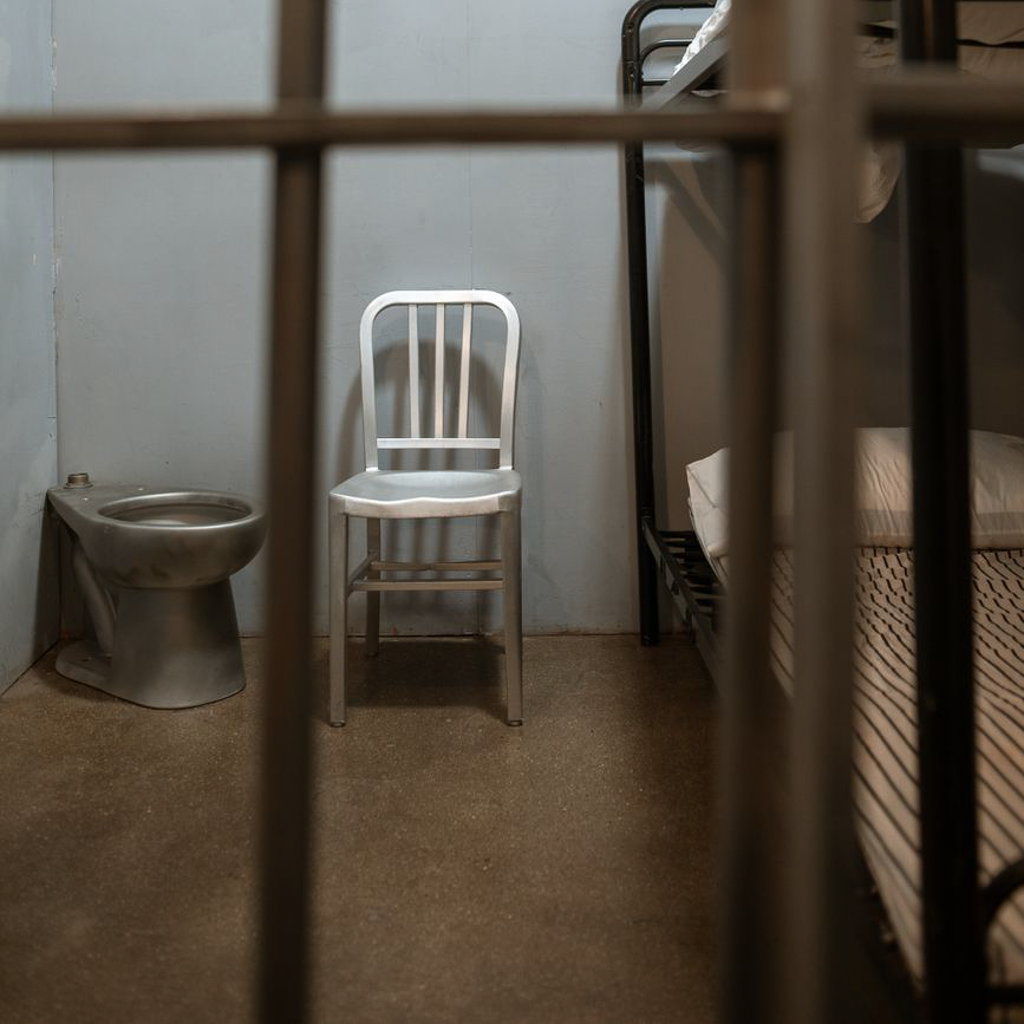
The $93 million of recent Louisiana funding is one reply, inbuilt concrete and metal

The correct query is the one Mea requested her mom after 4 years. It’s one her faculty by no means gave her an opportunity to ask in any respect: Will any individual please imagine me?
Her grandma believed her, however when Grandma acquired sick, Mea was alone once more, with different folks’s poor perceptions of her, in her faculty and her neighborhood. She didn’t need everybody to see her as a sufferer. She didn’t need folks to know she’d been abused. She wanted safety. So she protected herself, by anger
Construct the door. Earlier than she turns into the 17-year-old lady that Louisiana despatched to an grownup jail, six years after she first grew to become a sufferer, which set her path towards that jail.
Andrea Hagan is the founding father of Sample Hunters, LLC, a public scholarship platform that focuses on criminology, neighborhood engagement, and accountability. Additional info is out there at patternhunters.com.
Associated


