


Until you earn a living from home, you in all probability need to drive to work, discover a free place to park on the road, or pay a parking zone for area to park your automobile whilst you’re working. Now take into consideration in case you needed to lug costly, cumbersome or heavy gear to your job daily from a parking place that would doubtlessly be blocks from the place you’re employed. If you happen to work at night time, it complicates issues even additional as a result of as everyone knows, it’s not essentially secure for somebody to hold precious objects to and from their job after darkish.
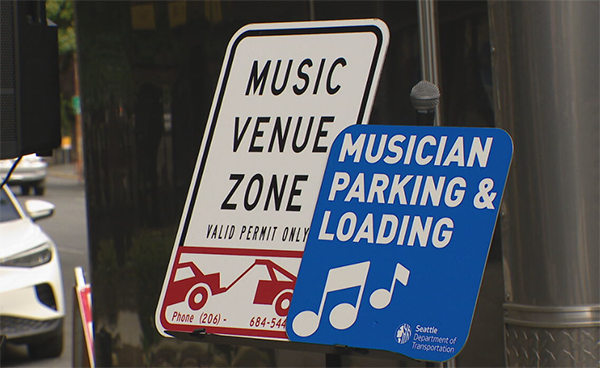
Photograph: KOMO, Seattle
All of those points plague musicians each single day. It’s notably worrisome since a lot of them can’t park their vehincles near their jobs on Bourbon or Frenchmen, and even near the venues or bars the place they might carry out. It’s one of many many issues that musicians need to endure simply to make a residing. Take into consideration all of the musicians who play in venues, bars, music golf equipment and theaters across the metropolis. It’s as a rule a detriment to their performing their jobs correctly (sure, enjoying music is a job) and even arriving on time for a gig. For many years, musicians have needed to attempt to discover a place to park and even to cease to drop off their devices on the placewhere they’re enjoying. For many years, the town of New Orleans, which touts itself as a “music metropolis,” has not addressed this drawback for the musicians and bands who assist to create the town’s status as a music metropolis.
Right here now we have an article written by Julia Heath of the town’s Workplace of Nighttime Financial system (O.N.E) addressing options that O.N.E.. has been engaged on to assist to resolve this difficulty, particularly through the use of different cities’ mannequin options. New Orleans has the flexibility to resolve this drawback, and it needs to be simple…
Musician Parking Is Handled Like Rocket Science (It Ought to Be a No-Brainer)
A common music trade want that’s nearly universally ignored.
If you happen to’ve ever watched a band load right into a venue in a metropolis, you’ve seen the issue.
They circle the block in search of someplace, wherever, to cease. Ultimately, they park blocks away, or throughout the road, or they double-park and hope they don’t get ticketed. They haul guitars, lighting rigs, amps, drum kits, and merch by visitors, throughout intersections, and down sidewalks, dodging autos, pedestrians and cracked concrete. Typically they pay out of pocket for a rideshare simply to get their gear to the door.
On the finish of the night time, they do all of it once more, however this time at midnight, carrying gear and doubtlessly money from suggestions again to wherever they managed to go away their car, generally alone and liable to being robbed.
Musicians present as much as work. They convey gear. They want area to unload and someplace to park. That’s it. That’s the issue. And but, in metropolis after metropolis, this extraordinarily regular operational actuality is handled like a logistical impossibility.
Which is why it’s genuinely wild that Seattle is the primary metropolis in the US to implement a real, functioning musician parking and loading program. Not as a result of Seattle is uniquely often called a “music metropolis,” however as a result of this needs to be (and might be) the lowest-hanging fruit for any metropolis that claims to help reside music.
This Is Not a Area of interest Concern
Musician parking and loading impacts each degree of the reside music ecosystem:
-
-
- A solo artist arriving in a private car with a guitar.
- An area band hauling drums, amps, and merch in a van.
- A touring act pulling up in a bus with a trailer.
-
Venues and musicians of all sizes face some model of the very same drawback each single day. And but, most cities ignore these very actual working challenges and depart venues left to attempt to give you their very own (generally unsafe) options.
The result’s predictable:
-
-
- Musicians circle the block in search of authorized curb area.
- Gear will get unloaded in unsafe or unlawful circumstances.
- Artists get ticketed or towed whereas actually doing their jobs.
- Venues take in fines, delays, and pissed off crews.
- Everybody begrudgingly accepts this as “simply the way in which it’s.”
-
And on prime of being annoying, fines and parking tickets are costly. One Seattle venue operator estimated that the town’s new musician parking program would save them round $45,000 per yr in fines, delays, and different operational interruptions. That’s actual, significant cash misplaced just because cities haven’t solved a solvable drawback.
Seattle’s Music Venue Parking Zones: A Frequent-Sense Answer
Seattle’s Music Venue Zone program is strictly the sort of easy, commonsense answer each music metropolis ought to have had years in the past. Underneath this system managed by Virginie Nadimi, qualifying music venues can apply for a Music Venue Zone allow, which provides them as much as three designated road areas close to their venue reserved for musician parking and loading 24/7. These are actual curb areas with signage and can be utilized for private autos, touring buses, and something in between.
The way it works (taken immediately from SDOT’s web site):
-
-
- Every venue can get one allow, which permits three Music Venue Zones Areas. The zones can be found 24/7 for parking and loading for musicians and their crews.
- Automobiles in these areas with out a allow might be ticketed and towed.
- The allow prices $250 per yr.
-
Like I stated, this isn’t rocket science. It’s the Metropolis listening to suggestions from their music venues and creating an answer.
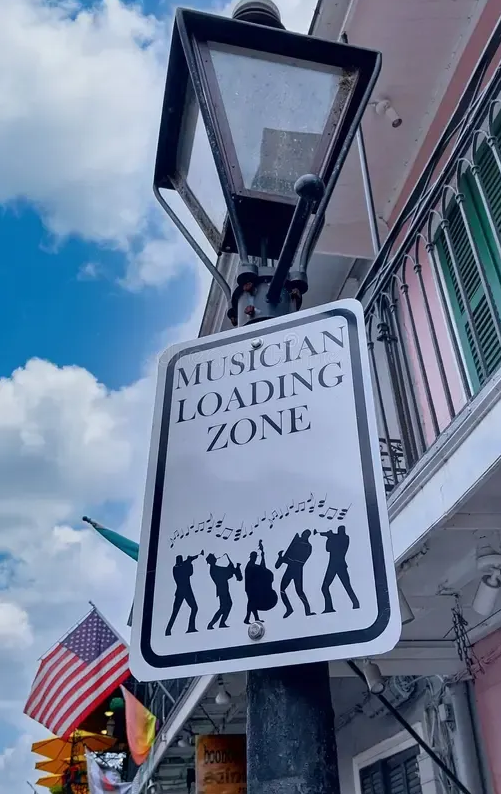
Photograph offered by O.N.E.
New Orleans: When Coverage Exists however Functionally Doesn’t Work
Again in 2019, New Orleans up to date its metropolis code to permit for Musician Loading Zones, which had been supposed to allow a car to park for as much as quarter-hour for loading/unloading gear earlier than and after exhibits at venues with a Mayoralty Allow.
On paper, it sounds supportive. In observe, it doesn’t perform the way in which musicians or venues really want it to. To be clear, there are three Musician Loading Zones in New Orleans (and over 120 Stay Leisure permits at present energetic).
This system is constructed on a key assumption: {that a} venue already has a pre-designated freight loading zone that may also be used for musician loading with further signage put in. However that assumption is vastly incorrect— most venues don’t have freight loading zones in areas that make sense for load-in. In the event that they exist in any respect, they’re usually positioned based mostly on normal supply wants, not the place bands are literally getting into the constructing and never the place load-in can occur safely and effectively.
Even for venues that do have a freight zone in an excellent place, there are nonetheless issues. After loading in, musicians want to maneuver their autos some other place to park. So the method turns into fragmented: discover the loading zone (if it’s obtainable), hope nobody is illegally parked in it, unload rapidly, then re-enter the identical unpredictable parking setting to discover a authorized place to go away the automobile in the course of the present.
Like I stated, there are three of those zones in New Orleans, they usually aren’t even getting used.
Wait, Why Can’t Cities Simply Repair It?
On its face, this needs to be easy: determine a number of curb areas close to venues, designate them for musician loading, and transfer on.
However on the planet of Metropolis planning, allowing, and enforcement, everythinggggggg is sophisticated.
In lots of instances, even small curb adjustments set off a proper curb use or visitors research course of. That often means issuing a Request for Proposals (RFP), hiring an out of doors advisor, amassing information on parking utilization, analyzing visitors circulate, and producing a report usually over the course of months, generally years. By the point a suggestion comes again, everybody higher hope the people inside Metropolis Corridor championing sure points are nonetheless round, or the problem will once more be ignored.
Then there’s the political layer:
-
-
- Close by companies could push again over the loss of some parking areas.
- Residents could increase comparable issues.
- Inner departments (transportation, allowing, enforcement, and so forth) could have competing priorities or conflicting interpretations of how curb area needs to be used and might need a destructive response to being requested so as to add a brand new duty to their plate.
-
None of those issues are inherently unreasonable (generally), however taken collectively, they create a course of the place a comparatively small, focused repair will get handled like a serious infrastructure determination. And that’s the disconnect. As a result of whereas cities are finding out, debating and negotiating over a handful of curb areas, musicians are nonetheless double-parking, unloading in unsafe circumstances, and getting ticketed for doing their jobs.
That is the place confusion and prioritization intersect. Policymakers don’t at all times totally perceive the day-to-day realities of reside music operations, and since the problem doesn’t really feel pressing in comparison with different calls for, it will get slowed down, studied, deprioritized, after which, generally, forgotten.
In Conclusion: This Ought to Be Straightforward
On the finish of the day, this isn’t an advanced drawback. Cities already handle curb area for rideshares, handicap parking, deliveries, development, movie manufacturing, parades, and main occasions. They designate zones, implement guidelines, and adapt when one thing isn’t working. The concept musician parking is someway too complicated to resolve simply doesn’t make sense.
What’s really taking place does make sense, as irritating as it’s. Stay music operations are misunderstood, deprioritized, and are on the liberty of methods that aren’t constructed to reply rapidly to real-world wants.
However a useful program shouldn’t be sophisticated! On the danger of oversimplifying, it actually solely wants:
-
-
- Designated curb area close to venues, clearly marked.
- Predictable (in all probability annual) permits, with clear necessities and software timelines
- 24/7 entry that displays actual venue load-in and load-out schedules.
- Clear outreach and training so musicians and venues realize it exists.
- Enforcement coaching and alignment so the coverage really means one thing and if somebody illegally parks in certainly one of these areas, it’s handled.
-
None of that is radical or costly (in reality, it might be used as a income producing software for cities). It simply requires cities to deal with musicians like employees whose labor has bodily necessities.
Seattle didn’t clear up the whole lot. However they proved that when a metropolis listens, coordinates internally, and prioritizes an trade they are saying they worth, one thing that has been handled as sophisticated for many years could be resolved with a number of curb areas, clear signage, and aligned enforcement. The bar actually is that low, however till extra cities meet it, musicians will preserve doing what they’ve at all times finished—figuring it out themselves, absorbing the prices, and navigating methods that weren’t designed with them in thoughts.


